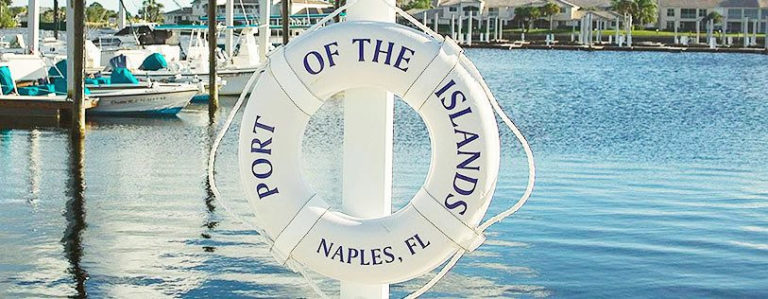
Port of the Islands is a beautiful waterfront resort community located in the Everglades and
East of Marco Island in Collier County, Florida. The Port of the Islands Community
Improvement District (CID) provides the local governmental services for the Port of the
Islands planned community. Services include treatment and distribution of water,
collection and treatment of waste water or sewage, road maintenance, irrigation water and
other similar municipal services needed by the Port of the Islands Community. The Port of
the Islands CID was established in 1990 and has grown steadily since that time.

The community consists of two hotels, a 174 slip marina, 165 single family lots, 644
multifamily units, and undeveloped property with approximately 220 potential building
sites.

Approximately 109 of the 165 single family lots have houses which have been constructed
at this time and 510 of the County approved 644 multifamily units have been constructed.
The following summarizes the status of development in these residential areas which have
been developed.

The Cays – Phase I (west side)                        59 out of 75 single family lots
The Cays – Phase II (east side)                        50 out of 90 single family lots
Sunset Cay/Sunset Cay Lakes                        192 out of 192 multifamily units
Sunrise Cay                                                         68 out of 68 multifamily units
Stella Maris                                                          134 out of 134 multifamily units
Orchid Cove                                                         116 out of 160 multifamily units
The Retreat del Sol                                            0 out of 90 multifamily units
Port of the Islands Community
Improvement District
Community Updates:

F
ebruary 2012

WATER TREATMENT PLANT
- Update

Work on the new Water Treatment Plant is progressing toward completion at a fairly rapid
pace.  The building has been substantially completed and dried-in, underground work
mostly completed, and most of the equipment has been set into place.  Much of the
electrical wiring has been roughed and wiring continues to be pulled through the conduits
for power as well as instrumentation.  The contractor is working toward being able to
startup equipment for testing during February.  By late February, all systems are expected
to be complete and operational for full functional testing.  The project has been designed
and constructed to allow the existing water treatment plant to remain online even after the
new water treatment plant becomes operational.  Functional testing of the new water
treatment plant will consist of simultaneous operation of all systems with the production of
potable water, but with the water produced not yet being sent to the customers.  This will
allow making sure all systems are working together as needed while allowing testing of the
water being produced to make sure that it is meeting all expectations and regulatory
requirements before sending it to the community.  All water produced at the new water
treatment plant during this testing period will be sent to the irrigation water storage tanks
and will be used by the community for irrigation, so no water will be wasted.  During this
period, the existing water treatment plant will continue provide water to the community.  
Sometime in March, it is anticipated that the switch over from the existing water treatment
plant to the new water treatment plant will be made.  During this switch-over, the existing
water treatment plant will remain available just in case it was needed due to any
unforeseen
circumstances.

What to expect when the new water treatment plant comes online?  The new water
treatment plant is state-of-the-art and similar technology to what Collier County and many
of the other utility systems in southwest Florida currently use at their newer water
treatment plants.  In fact, with this technology the water produced is so pure and low in
hardness that part of the new systems actually will add chemicals to the water being
produced in order to make sure that it is more balanced before sending it to the customers.  
The reason for this is that high purity water is actually aggressive and corrosive in nature
and needs some buffering before use.  It is possible that during the initial period following
water from the new water treatment plant being sent to the pipelines throughout the
community that there may be a period when some hardness deposited over the years inside
the distribution pipes will dissolve and gradually be removed from the system.  If this
occurs, it should not be noticeable nor last very long.

Some residents have asked whether they should continue to use home water softeners after
the new water treatment plant comes on-line.  The answer is NO - the water from the new
water treatment plant will be very pure and low in hardness so no in-home water softening
will be needed.  This should save monthly fees and costs for those who have been using in-
home softening systems.

As the schedule for the switch over from the existing water treatment plant to the new
water treatment plant gets closer, more details will be sent to the community alerting them
when this will occur.  Also an open-house and celebration will be held once the new water
treatment plant is complete and the entire community will be invited to view the new
facility.


Ron Benson